Total Knee Replacement
What a total knee replacement involves, who it suits, what recovery asks of you, and the risks and alternatives worth understanding before deciding.
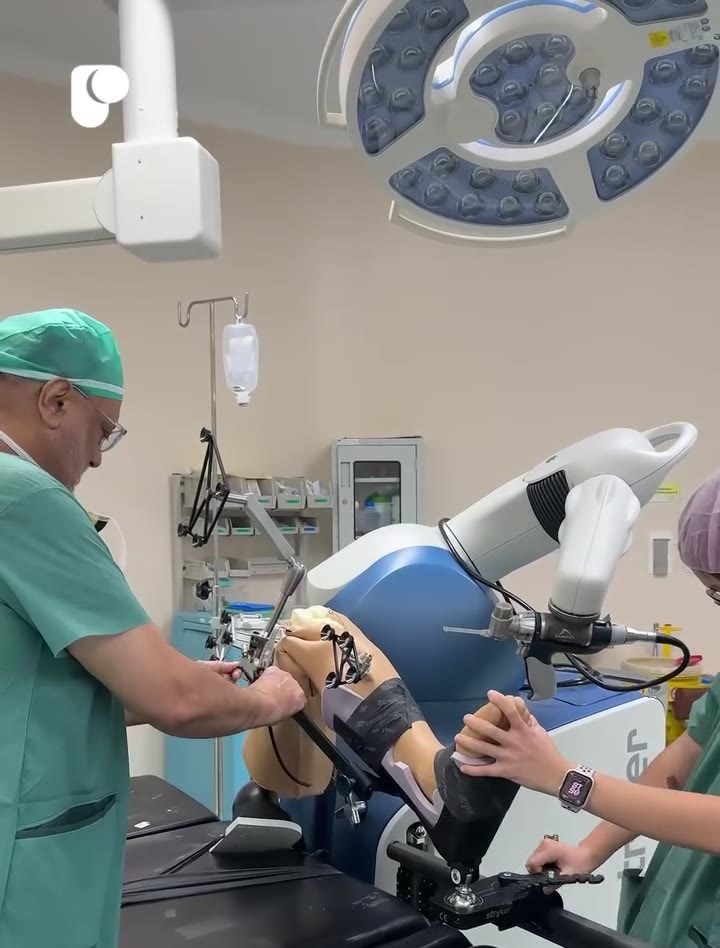
A total knee replacement resurfaces the worn surfaces of the knee joint with metal and plastic components. It does not replace the whole knee. It replaces the bearing surfaces, so that bone no longer grinds on bone.
It is one of the more reliable operations in medicine for the right patient, and the wrong operation for a knee that is not yet worn out.
Who it suits
- Arthritis affecting more than one compartment of the knee
- Pain that limits walking, stairs, work or sleep
- X-ray changes that match the symptoms, taken weight-bearing
- Non-surgical treatment already given a genuine trial: strengthening, weight reduction where relevant, simple analgesia, and injection where appropriate
- General health good enough to get through an operation and the rehabilitation that follows
If the arthritis is confined to one compartment, a partial replacement may be a better option. That comparison is set out in partial or total.
What the operation involves
- Anaesthetic. Usually spinal, often with a nerve block, sometimes general. The anaesthetist will discuss this with you.
- Approach. An incision at the front of the knee.
- Preparation. The worn ends of the femur and tibia are cut to accept the implant, using either conventional instruments or robotic assistance.
- Implant. A metal femoral component, a metal tibial component with a plastic bearing, and often a plastic patellar resurfacing.
- Balance and alignment. Getting the leg straight and the ligaments balanced is the part that determines how the knee feels afterwards.
- Duration. Typically one to two hours.
Recovery in outline
Walking with a frame usually begins the day of surgery or the day after. Average inpatient stay in Malaysian private hospitals is around four days, based on insurance claims data. Most functional recovery occurs over three to six months, and improvement can continue for about a year.
The week-by-week recovery guide covers driving, work, stairs, kneeling, and flying if you are travelling.
Risks
These deserve to be read rather than skimmed:
- Infection. Uncommon, but serious when it happens, and the reason for antibiotic prophylaxis, careful wound care, and getting diabetes and smoking under control beforehand.
- Blood clots. Deep vein thrombosis and pulmonary embolism. Prevented with medication and early mobilisation, which is why you are walked so soon.
- Stiffness. A knee that does not regain movement. Rehabilitation is the main defence.
- Persistent pain. A minority of patients remain dissatisfied despite a technically sound operation. This is worth knowing before, not after.
- Nerve or vessel injury, fracture around the implant, wound healing problems.
- Loosening or wear over time, and eventual revision surgery.
Your individual risk is not the average. It depends on your weight, diabetes control, smoking, cardiovascular health and previous surgery, and it should be discussed specifically.
Alternatives worth discussing
- Structured strengthening and exercise therapy, properly supervised
- Weight reduction where relevant, which has a substantial mechanical effect
- Simple analgesia and activity modification
- Corticosteroid injection for flares
- Partial replacement, if the arthritis is confined
- Osteotomy, in selected younger patients with deformity
- Doing nothing for now, which is a legitimate choice and should be on the list
Cell-based and platelet injections are discussed here, with the current evidence set out in full. They are not a way of avoiding a replacement that a knee genuinely needs.
Questions to ask before agreeing
- Which compartments are affected on my X-rays?
- Why a total rather than a partial?
- Which implant, and why that one?
- How long should I expect it to last?
- What is my personal risk profile?
- What does the rehabilitation programme involve, and who provides it?
- What is the itemised cost estimate, and what is excluded?
Common questions
When is a knee replacement the right decision?
Generally when the joint surface is worn out on imaging, the pain limits what you can do day to day, and non-surgical treatment has been given a proper trial. It is a quality-of-life operation rather than an emergency, so the timing is largely yours. What tips the balance for most patients is pain at night, pain at rest, and giving up activities that matter to them.
How long will the implant last?
Modern implants commonly last well beyond a decade and often considerably longer, but longevity depends on your age, weight, activity level and the alignment achieved at surgery. Ask specifically what is expected for your implant and your circumstances, and what a revision would involve.
What are the main risks?
The important ones are infection, blood clots in the leg or lung, stiffness, persistent pain, injury to nerves or blood vessels, fracture around the implant, and the eventual need for revision. Serious complications are uncommon but they are not rare enough to skip over, and your own risk depends on your general health, weight, diabetes control and smoking status.
Will I be able to kneel afterwards?
Many patients can, but not all, and a replaced knee usually does not achieve the deep flexion of a normal knee. If kneeling matters to you, for prayer or for work, raise it before surgery rather than after, because it can influence the plan.
References
Related reading
Knee Replacement Cost in Malaysia: A Sourced Guide
What a total knee replacement actually costs in a Malaysian private hospital, where the money goes, and why the figure you were quoted may not be the figure you pay.
Knee Replacement Recovery: A Week by Week Timeline
What recovery after a total knee replacement actually looks like week by week, when you can drive, work, climb stairs, kneel to pray, and fly.
Partial or Total Knee Replacement: How to Decide
How surgeons choose between a partial and a total knee replacement, what each involves, how long they last, and the questions to ask if only one was offered.